
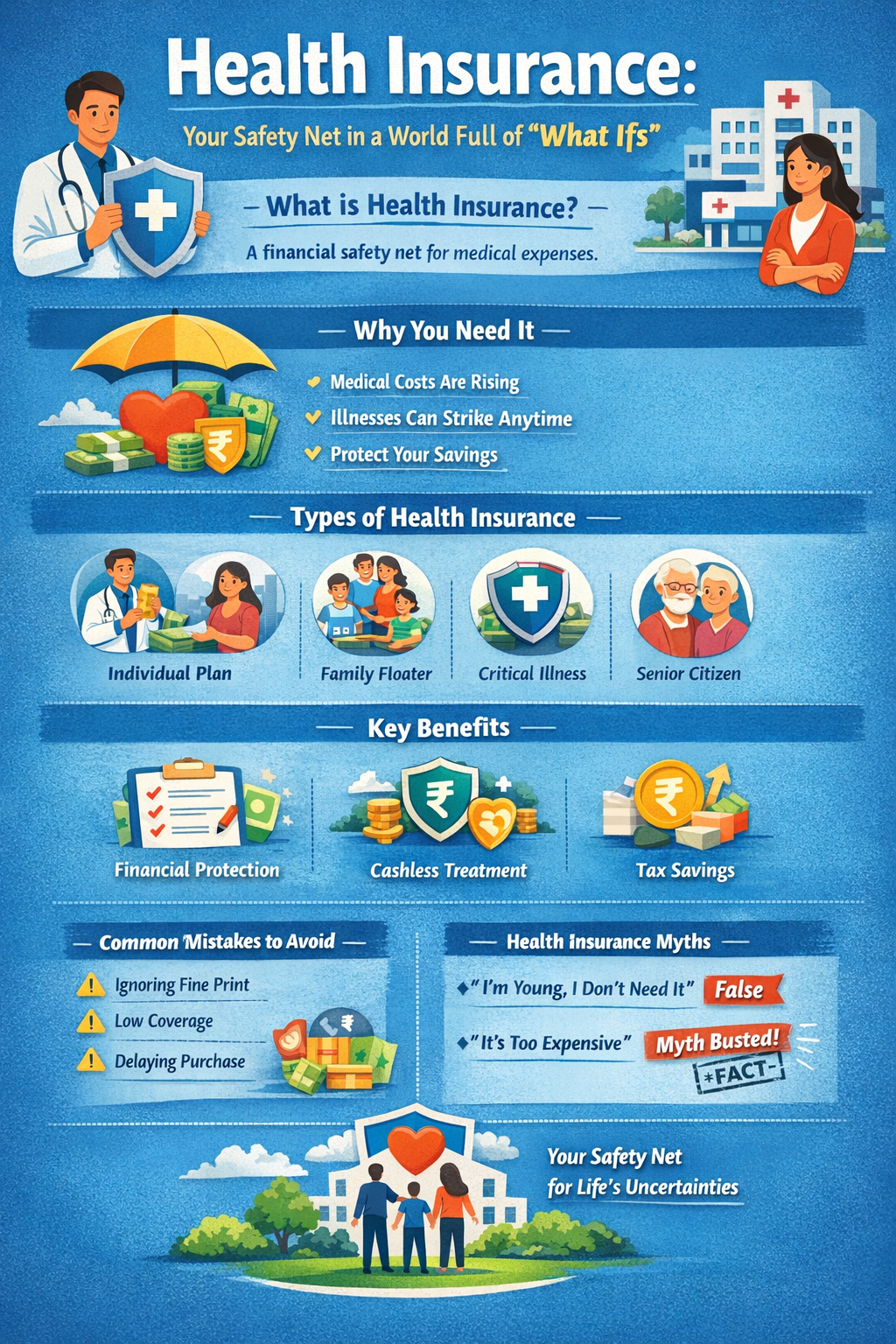
Health Insurance Your Safety Net in a World Full of “What Ifs”
Let’s be honest—life is unpredictable. One day you’re fine, the next day you’re staring at a hospital bill that feels like it belongs to a billionaire. Scary, right? That’s exactly where health insurance steps in, like a financial bodyguard you didn’t know you desperately needed.
But what exactly is health insurance? And why does everyone keep saying it’s essential? Grab a cup of chai, sit back, and let’s break it down in the simplest, most human way possible.
What Is Health Insurance, Really?
Think of health insurance as a deal between you and an insurance company. You pay a small amount regularly (called a premium), and in return, they cover a big chunk of your medical expenses when things go wrong.
It’s like subscribing to peace of mind.
Instead of paying lakhs out of your pocket during emergencies, your insurer shares the burden. Sounds like a fair trade, doesn’t it?
Why Health Insurance Is No Longer Optional
You might be thinking, “I’m healthy, why do I need it?” That’s like saying, “I won’t buy a helmet because I’ve never had an accident.”
Here’s the reality:
- Medical costs are skyrocketing
- Lifestyle diseases are rising
- Emergencies don’t send invitations
A single hospitalization can wipe out your savings. Health insurance acts like a shield, protecting your hard-earned money from unexpected attacks.
Types of Health Insurance Plans
Not all health insurance plans are created equal. Let’s quickly explore the main types so you know what fits your life best.
1. Individual Health Insurance
This covers just you. Simple, straightforward, and ideal if you’re single or want personal coverage.
2. Family Floater Plans
One plan covers your entire family. It’s like a shared wallet—everyone uses the same sum insured.
3. Critical Illness Insurance
This is for serious diseases like cancer, heart attacks, or stroke. It pays a lump sum amount when diagnosed.
4. Senior Citizen Plans
Designed specifically for older adults, with coverage tailored to age-related health risks.
5. Group Health Insurance
Usually provided by employers. It’s helpful—but relying only on this can be risky if you switch jobs.
Key Benefits of Health Insurance
Still on the fence? Let’s talk about what you actually gain.
Financial Protection
Medical treatments can be expensive. Insurance ensures your bank balance doesn’t take a massive hit.
Cashless Treatment
Most insurers tie up with hospitals. You walk in, get treated, and the insurer pays directly—no upfront cash needed.
Tax Benefits
In many countries (including India), you get tax deductions under sections like 80D. Saving health and saving tax? Double win.
Peace of Mind
This one’s underrated. Knowing you’re covered lets you sleep better at night.
How Does Health Insurance Work?
Let’s simplify it with an example.
You buy a policy with a ₹5 lakh coverage. You pay a yearly premium—say ₹10,000.
Now, if you get hospitalized and the bill is ₹2 lakh:
- You don’t pay everything
- The insurer covers most (depending on policy terms)
It’s like having a financial backup plan always ready in your pocket.
Important Terms You Should Know
Insurance can feel like learning a new language. Here are a few key terms to keep you sharp:
- Premium: The amount you pay for the policy
- Sum Insured: Maximum coverage amount
- Deductible: Amount you pay before insurance kicks in
- Co-payment: A percentage you share in the bill
- Network Hospitals: Hospitals tied with your insurer
Once you understand these, you’re already ahead of most people.
How to Choose the Right Health Insurance Plan
Choosing a plan isn’t about picking the cheapest option—it’s about picking the smartest one.
Ask yourself:
- How much coverage do I need?
- Does it include my family?
- Are my preferred hospitals covered?
- What’s the claim settlement ratio?
Think of it like buying a phone—you don’t just look at price, you check features, performance, and reliability.
Common Mistakes to Avoid
Even smart people mess this up sometimes. Don’t be that person.
Ignoring Fine Print
That tiny text? It matters. Always read it.
Buying Late
The younger you are, the cheaper your premium. Waiting can cost you more later.
Choosing Low Coverage
Healthcare inflation is real. ₹2 lakh coverage today might not be enough tomorrow.
Not Disclosing Medical History
Always be honest. Hiding information can lead to claim rejection.
Health Insurance Myths (Busted!)
Let’s clear the air.
“I’m young, I don’t need insurance.”
Wrong. Youth is the best time to buy it.
“It’s too expensive.”
Hospital bills are way more expensive.
“My company insurance is enough.”
What happens if you leave your job?
The Emotional Side of Health Insurance
Here’s something we don’t talk about enough.
Health insurance isn’t just about money—it’s about dignity.
Imagine not having to borrow from friends or sell assets during a medical emergency. Imagine focusing only on recovery, not bills.
That’s powerful.
Conclusion: Is Health Insurance Worth It?
Let’s keep it real—health insurance isn’t exciting. It’s not something you brag about. But when life throws a curveball, it becomes the most important thing you own.
It’s your silent protector. Your financial safety net. Your backup plan for life’s unexpected twists.
So ask yourself—would you rather pay a small amount now or risk everything later?
The choice is yours. But one thing’s clear: health insurance isn’t a luxury anymore—it’s a necessity.